IN CONVERSATION
pete john on TWO WAYS OF BEING REAL
Two images of the same person — both real, none of it fiction. And yet they produce two different people in our minds. A conversation about watching from the threshold, the credibility of the Polaroid, and how the order of images changes the judgements we make.
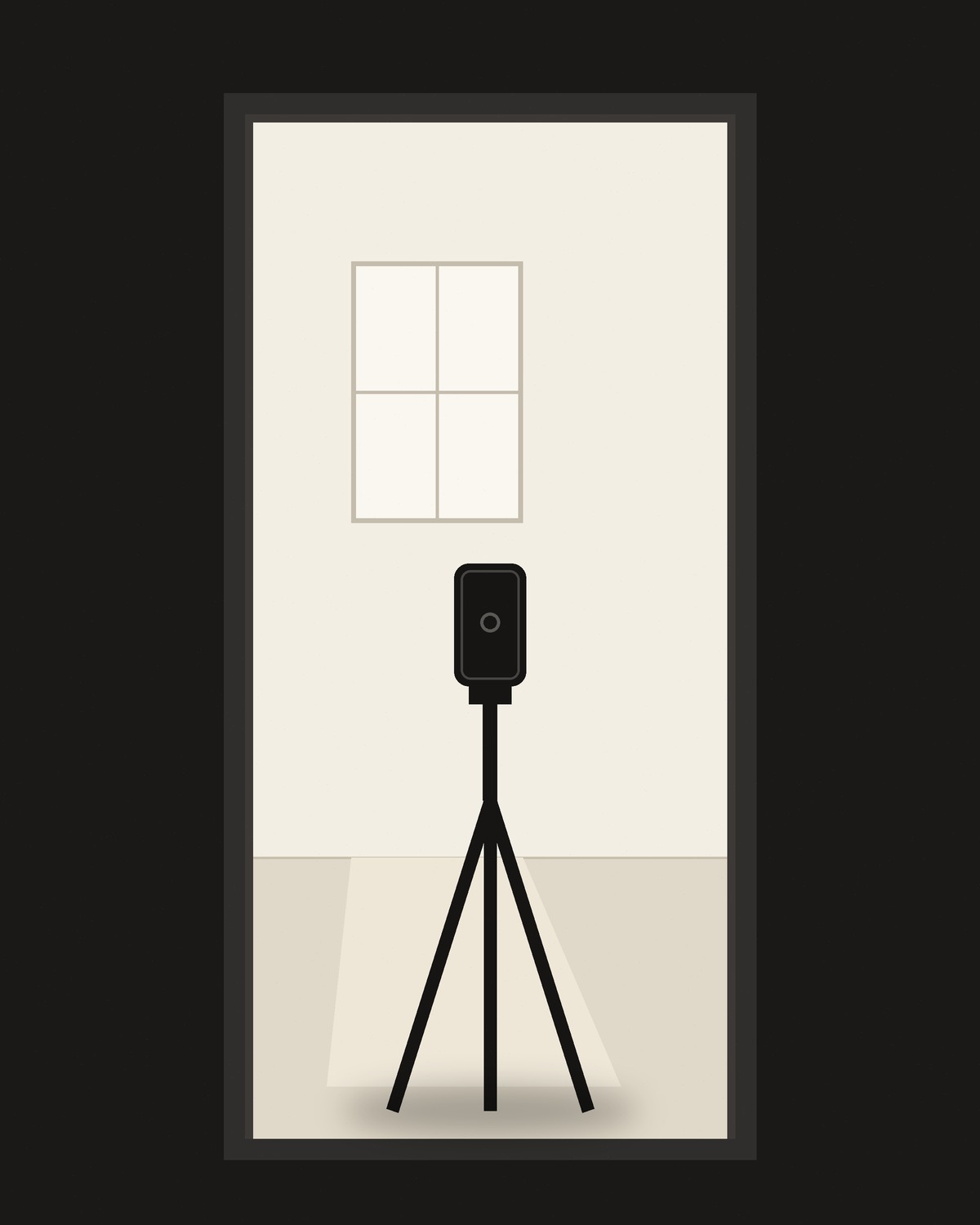
Your project is called TWO WAYS OF BEING REAL. Which two ways are we talking about?
The same person, twice. I show each person in two renderings: clothed, in a digital video of roughly one minute — and nude, in a series of analog Polaroids, doing the same activity in the same place. Both actually happened. None of it is fiction.
The point is this: both renderings are real. But they do not produce the same person in our minds. The project does not set reality against fiction. It shows two equally real appearances of one person and asks how clothing, medium, framing and sequence turn them into different truths.
Everything else in the project is a variation on that one idea: clothed and nude, digital video and analog Polaroid, series and single piece. The same material every time — and still, different judgements.
If viewers get to choose which pairs they compare, doesn't "real" become arbitrary?
It would, if I claimed reality where there is none. Here, everything is documented: one person, one place, one activity, one minute of video, a handful of instant pictures. What stays open is not whether something is real — it is what the comparison does to the person making it.
The pairs themselves are fixed. What varies is the order in which you encounter them and what you bring to them. That the same person prompts different judgements is not arbitrariness. It is the finding.
Your most striking formal decision: the camera never enters the room. It stands in the doorframe. Why?
Quite literally: the video is always shot from a threshold — a doorframe, a window, some comparable boundary between two spaces. The camera stands on a tripod and looks into the room. I stand beside it. I stand on the threshold and watch.
The threshold is where you ask permission. You have been invited, but you are not part of the home yet. That is the tension I want to keep in the picture: closeness, without giving up the observer's position.
The recording lasts about a minute, and the person does not know exactly when that minute begins or ends. I am not claiming this produces an unfiltered human being — the situation is deliberately constructed. I construct a tight frame in which a less controlled moment can occur. That is a different claim.
Why the same activity twice — once clothed, once nude? Behind that sits the old idea that nakedness reveals the true person.
No — and this matters to me. Clothing is not automatically disguise, and nudity is not automatically truth. Both are real appearances of the same person.
Clothes tell you a lot: profession, taste, status, belonging, an intended effect. Take them away and the gaze shifts — but no true core is revealed. What appears is simply a second form of the same person, one we almost never get to see.
The familiar activity gives people something to direct their attention at. Someone cooking cooks. Someone building a shelf builds a shelf. It is not a pose for the camera but an action with a purpose of its own — and you can see that in the footage.
Still — nudity attracts attention. Isn't the project exploiting that reflex?
It may attract the first look; I will not deny that. But the composition is meant to keep it from dictating the only look. Many images concentrate on hands, a face, a movement, the relation of body and task within the room. Genitals are not staged as the centrepiece — nor is the body artificially neutralised.
I cannot rule out a voyeuristic gaze. I cannot control how someone looks at the work. What I can decide is which gaze the pictures offer.
Many people consider a Polaroid more credible than any digital image. Yet an instant photograph, too, is the product of choices: framing, light, timing. Why should it be more honest?
It is not more honest. With a Polaroid I still choose the person, the light, the perspective, the film, the moment. The picture is as much a result of decisions as any other.
What is different is something specific: once the shutter has fired, there is no retouching and no after-the-fact construction of image elements. Between the moment of exposure, the chemical development and the physical original runs a visible, material continuity. Some fifteen minutes later the picture lies on the table — and what is on it was there.
That is precisely why so many people grant the instant photograph a special credibility — all the more so next to digital images that can now be generated by AI or altered at will. The project does not adopt that attribution as truth. It puts it on display and examines it.
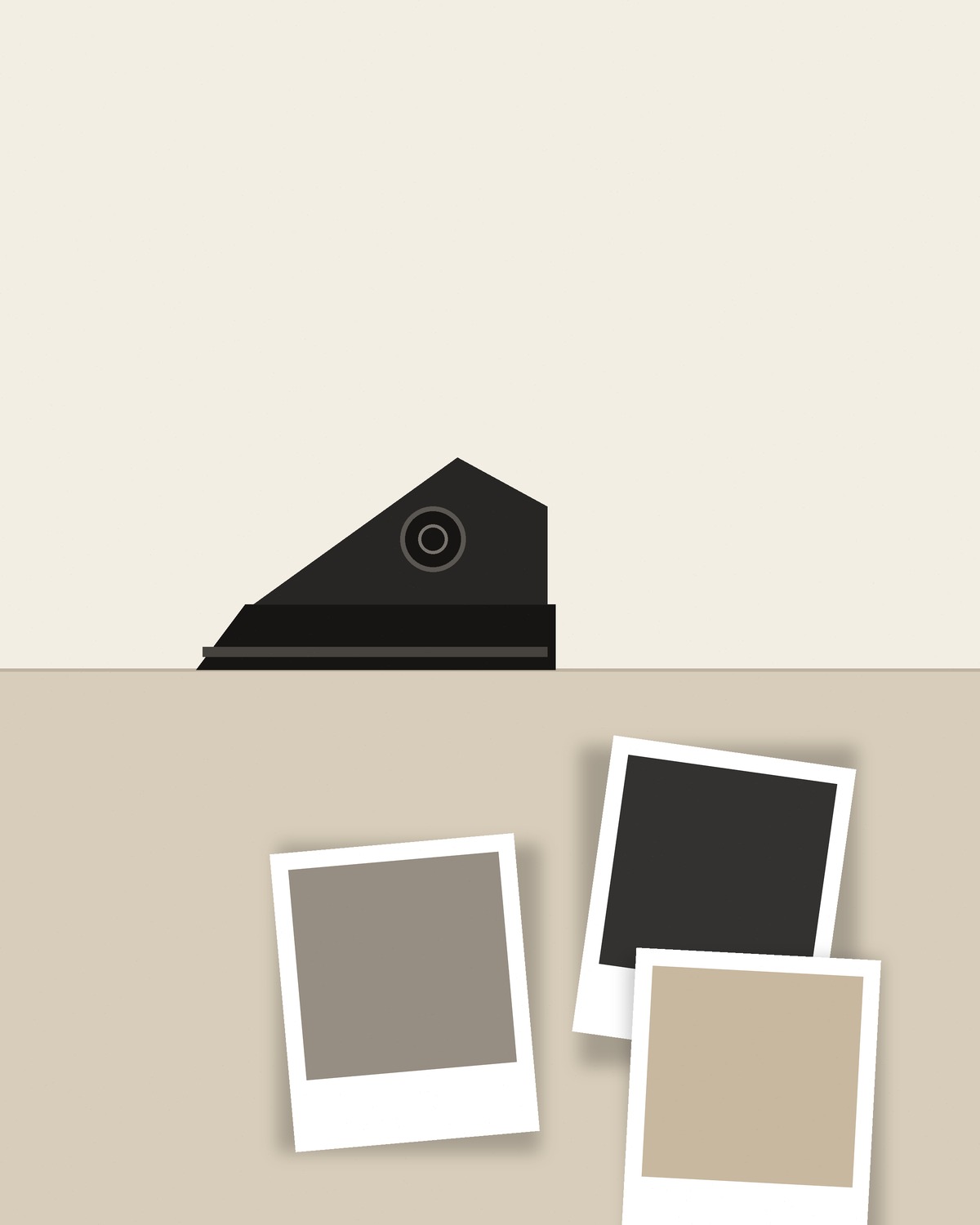
And then you take that original apart.
Yes. Within the project, the Polaroid has two states. First it is scanned and becomes part of the series. Within twelve hours I then take the physical original apart and deconstruct it. It remains the same picture — and becomes an unrepeatable single piece at the same time.
One thing matters to me here: taking a Polaroid apart with my hands does not make it more art than the digital video. The visible intervention is not a higher form of art. It is another state of the same work.
A one-minute, unedited video of someone cooking — is that art already?
For me, art does not begin where something looks especially artful. It begins where the visible does not end with its first meaning.
At first, the video is exactly that: an action that actually took place, unedited. But it does not stand alone. The fixed position on the threshold, the link to the nude Polaroid series, the possible sequences — together they open a space that viewers enter with their own expectations, judgements and inner images. The work also consists of what happens in their heads.
And the video does not become art merely because a hand-worked object hangs beside it. Where exactly documentation ends and art begins is a question I deliberately leave partly open. That blur belongs to the project.
They determine the situation. I determine the form in which it becomes visible.
The people you portray choose the place and the activity themselves. What is left of your authorship?
The participants bring the situation: their place, their activity, their decision to show themselves. What comes from me is the form. I decide who becomes part of the project. I set the formal system — the threshold position, the framing, the perspectives, colour or black-and-white film. Within those rules, the people portrayed hold the initiative. But they are my rules.
The power relation between the person behind the camera and the person in front of it does not vanish because of that. It shifts — through transparency and shared decisions. Selection runs through a structured, multi-stage process: Steffanie handles the pre-selection and the preparatory communication; after that, I speak personally with every prospective participant. Before the first picture, it is settled what will be made, what will not, and what happens to the material.
The people taking part have no professional modelling experience, and they have consciously decided to show themselves. Nobody is to be surprised or exposed. That is not politeness — it is a precondition. Without that certainty, the moment I am after would not exist.
The pictures stay the same. The person in our head changes.
You hand the sequencing of video and Polaroids to curators and visitors. Isn't that abdicating an artistic decision — precisely because order changes meaning?
It is the opposite: a decision — just not for a single reading. See the clothed video first, and you meet the nude series with one kind of foreknowledge. See the nude body first, and you will read clothing, activity and behaviour differently afterwards. Even the arrangement of the Polaroids among themselves changes the narrative.
To fix one binding sequence would end the experiment before it starts. That is why the curatorial arrangement is itself part of the work. Two people can walk through the same exhibition in different orders and talk afterwards about how differently the same person struck them. That conversation belongs to the piece.
Continue with the project
Selected works and the current state of the series — the first shoots are underway in Cologne and Münster.
→ VIEW THE WORKSFollow the process: @petejohnart · More about pete john
Thinking of stepping in front of the camera yourself? Applying takes two minutes and is non-binding. To the application